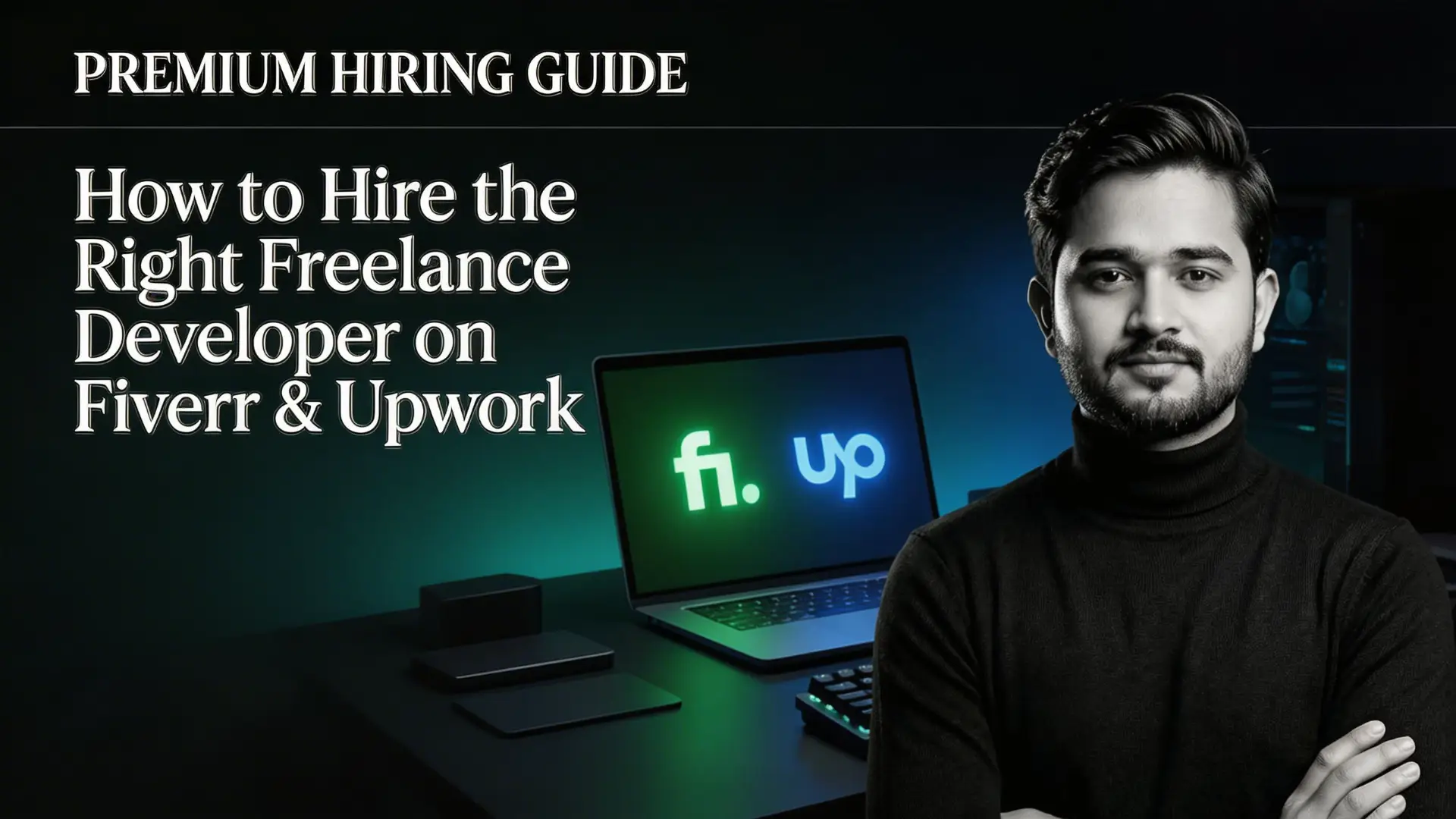
How to Hire the Right Freelance Developer on Fiverr & Upwork
Written by Usman Ali
Full Stack Developer & Shopify Expert with 5+ years of experience building high-performance web applications. Available for freelance projects worldwide.
Hiring a freelance developer can feel like navigating a minefield. With thousands of profiles on platforms like Fiverr and Upwork, how do you separate the exceptional talent from the noise? As a full-stack developer who has completed 100+ projects on these platforms, I'm pulling back the curtain on exactly what to look for.
Why Fiverr & Upwork Are Your Best Bet
Both platforms offer unique advantages for different project types. Understanding these differences is the first step to making the right hire.
Fiverr: Best for Defined Projects
Fiverr operates on a gig-based model, which means sellers offer pre-packaged services at fixed prices. This is ideal when you have a well-defined project scope:
- Landing page design — Fixed deliverables, clear pricing
- WordPress setup — Package deals with hosting configuration
- Logo and branding — Multiple revision rounds included
- Shopify store setup — Complete e-commerce solutions
Pro tip: Look for sellers with the "Top Rated" or "Fiverr's Choice" badge. These sellers have proven track records and consistently high ratings.
Upwork: Best for Ongoing Work
Upwork uses an hourly or fixed-price contract model, making it better for:
- Complex web applications requiring iterative development
- Long-term maintenance and feature additions
- Full-stack projects where scope might evolve
- Dedicated developer relationships
Pro tip: On Upwork, check the freelancer's Job Success Score (JSS). A score above 90% indicates consistently satisfied clients.
Red Flags to Watch For
Before you hit that "Hire" button, here are critical warning signs:
1. Unrealistically Low Pricing
If someone offers to build a custom e-commerce platform for $50, run. Quality development takes time, expertise, and proper architecture. Budget pricing typically means:
- Copy-pasted templates with no customization
- No testing or quality assurance
- Zero post-delivery support
- Potential security vulnerabilities
2. No Portfolio or Vague Examples
A legitimate developer will have a portfolio of live, working websites. Ask for URLs you can visit, not just screenshots (which can be faked or borrowed).
3. Poor Communication in Initial Messages
If a freelancer takes days to respond before they're even hired, imagine their responsiveness during the project. Communication speed during the interview phase is a strong predictor of project success.
4. No Questions About Your Project
A great developer will ask detailed questions before accepting your project:
- Who is your target audience?
- What features are essential vs. nice-to-have?
- Do you have brand guidelines or design preferences?
- What's your timeline and budget?
If they just say "yes I can do it, send payment," consider it a red flag.
What to Look for in a Great Developer
Technical Skills That Matter
For modern web development, look for experience with:
- React / Next.js — The industry standard for high-performance websites
- TypeScript — Shows attention to code quality and maintainability
- Tailwind CSS / Modern CSS — Clean, responsive design implementation
- API Integration — Payment gateways, CRM systems, analytics
- SEO Knowledge — A website that nobody finds is worthless
Soft Skills That Make the Difference
- Clear communication — Can they explain technical decisions in plain language?
- Project management — Do they provide timelines and progress updates?
- Problem-solving mindset — How do they handle unexpected challenges?
- Post-delivery support — Will they help with bugs after launch?
The Hiring Process: Step by Step
Step 1: Define Your Project Clearly
Before reaching out to any freelancer, document:
- Core functionality (what must it do?)
- Design preferences (share examples of websites you love)
- Technical requirements (hosting, integrations, CMS needs)
- Budget range (be realistic about quality vs. cost)
- Timeline (when do you need it live?)
Step 2: Shortlist 3-5 Candidates
Don't hire the first person you see. Compare:
- Portfolio quality and relevance to your project
- Reviews and ratings from past clients
- Response time and communication quality
- Pricing relative to the market
Step 3: Conduct a Brief Interview
Ask specific questions:
- "Can you walk me through a similar project you've completed?"
- "What tech stack would you recommend for my project and why?"
- "How do you handle revisions and feedback?"
- "What does your development process look like?"
Step 4: Start with a Small Test
If possible, hire for a small, defined task first. This lets you evaluate:
- Code quality
- Communication style
- Adherence to deadlines
- Attention to detail
Step 5: Set Clear Milestones
Break the project into phases with specific deliverables and payment milestones. This protects both you and the developer.
My Approach as a Freelance Developer
When clients hire me on Fiverr or Upwork, here's what they can expect:
- Discovery Call — I understand your vision, audience, and goals
- Detailed Proposal — Clear scope, timeline, and pricing breakdown
- Design Phase — UI/UX mockups for approval before coding begins
- Development Sprints — Regular updates with preview links
- Testing & QA — Cross-browser, mobile-responsive, performance optimized
- Launch & Support — Deployment assistance + 30-day post-launch support
Conclusion
Hiring a freelance developer doesn't have to be risky. With the right approach — clear requirements, thorough vetting, and structured milestones — you can find exceptional talent on both Fiverr and Upwork.
The key is treating the hiring process with the same care you'd give to hiring a full-time team member. Your website is your digital storefront, and it deserves a developer who treats it that way.
Ready to start your project? Get in touch and let's build something exceptional together.
Discussion (2)
Great article! Next.js is indeed amazing.
I'm still learning React, is this too advanced?